Advisors & EPCs
Deliver the first pass in hours, not weeks
Noda reads the operator documents, cross-checks the sources and produces the red-flag pass. Your engineers review it and put their name on it. Any site, any country, up to two hours each.
Up to half of every grid-engineering project goes to reconciling operator files
Reconciling operator files is what the engineering waits for. Your engineers are still doing it by hand.
What you can do with Noda
Five things you can do before an engineer opens a file
- 01
Take the red-flag pass before the mandate.
An investor asks whether a project is worth a serious look. Run it, review it and send the answer the same day instead of the same month.
- 02
Take a mandate in a market you do not cover.
Noda reads that operator’s own published documents on the day you run it, and tells you plainly what it could not establish.
- 03
Check the tool the client already used.
When a developer arrives with output from a screening tool, run the same site yourself with the sources visible and answer whether it holds up.
- 04
Move engineer time from reading to judgement.
The twenty documents a senior engineer reads before forming a view arrive already read. The view is there to check, not to build.
- 05
Take on more mandates with the same team.
Your name still goes on the output. The reading does not have to. The bottleneck moves off the calendar and onto the judgement.
With and without Noda
The first pass is the part nobody wants to do
The constraint on a consultancy is not demand. It is engineers, and it is engineer-hours going to reading rather than to engineering.
A senior engineer reads twenty documents before forming a view.
The reading is done, and the view is there to check.
The red-flag pass takes weeks and is priced in hours.
The red-flag pass takes up to two hours.
Every new market means learning a new operator from scratch.
Any operator, any country, read at the moment you run it.
Reading is manual work you cannot bill for at full value.
Engineer time goes to the judgement your client is paying for.
One mandate at a time, because people are the ceiling.
More mandates through the same team, without hiring.
Consultancies price in hours, and reading is the row you cannot bill for at full value. Noda moves those hours off the reading and onto the judgement.
The platform
From a boundary you draw to a verdict you can defend
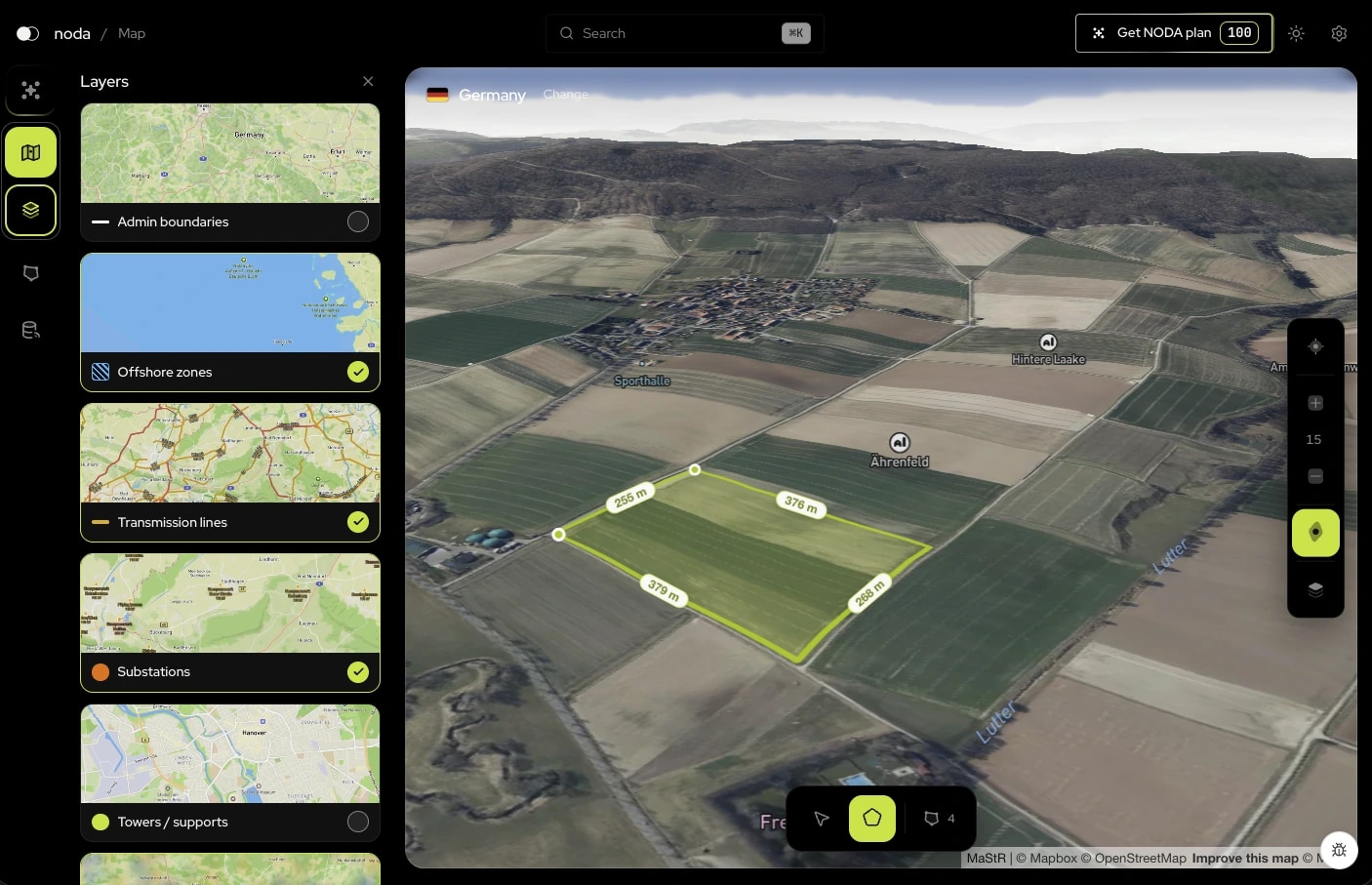
Point at any site your client sent you.
A coordinate in any country, the technology, and the export the client is chasing. That is enough to begin, in a market you have never worked before.
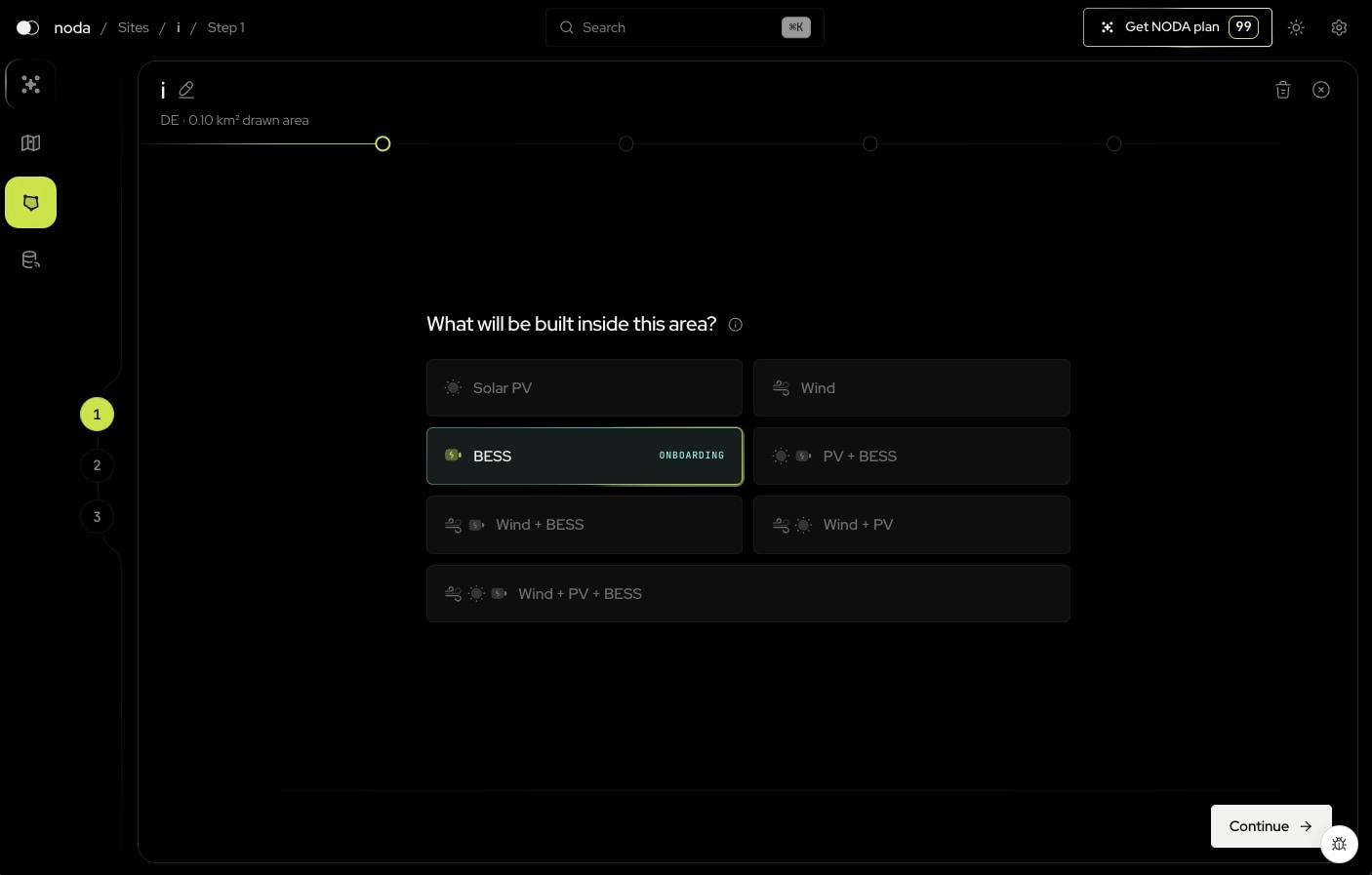
Pin the questions your client is really asking.
Grid, yield, finance, permits, routing, curtailment. Rank the eight that matter on this mandate, or type the question your engineer would type.
Ingest the data room without pulling an engineer off another mandate.
Whatever the client has on the site: letters, drawings, boundaries, models, scans. Read on the day you run it, kept private to your account.
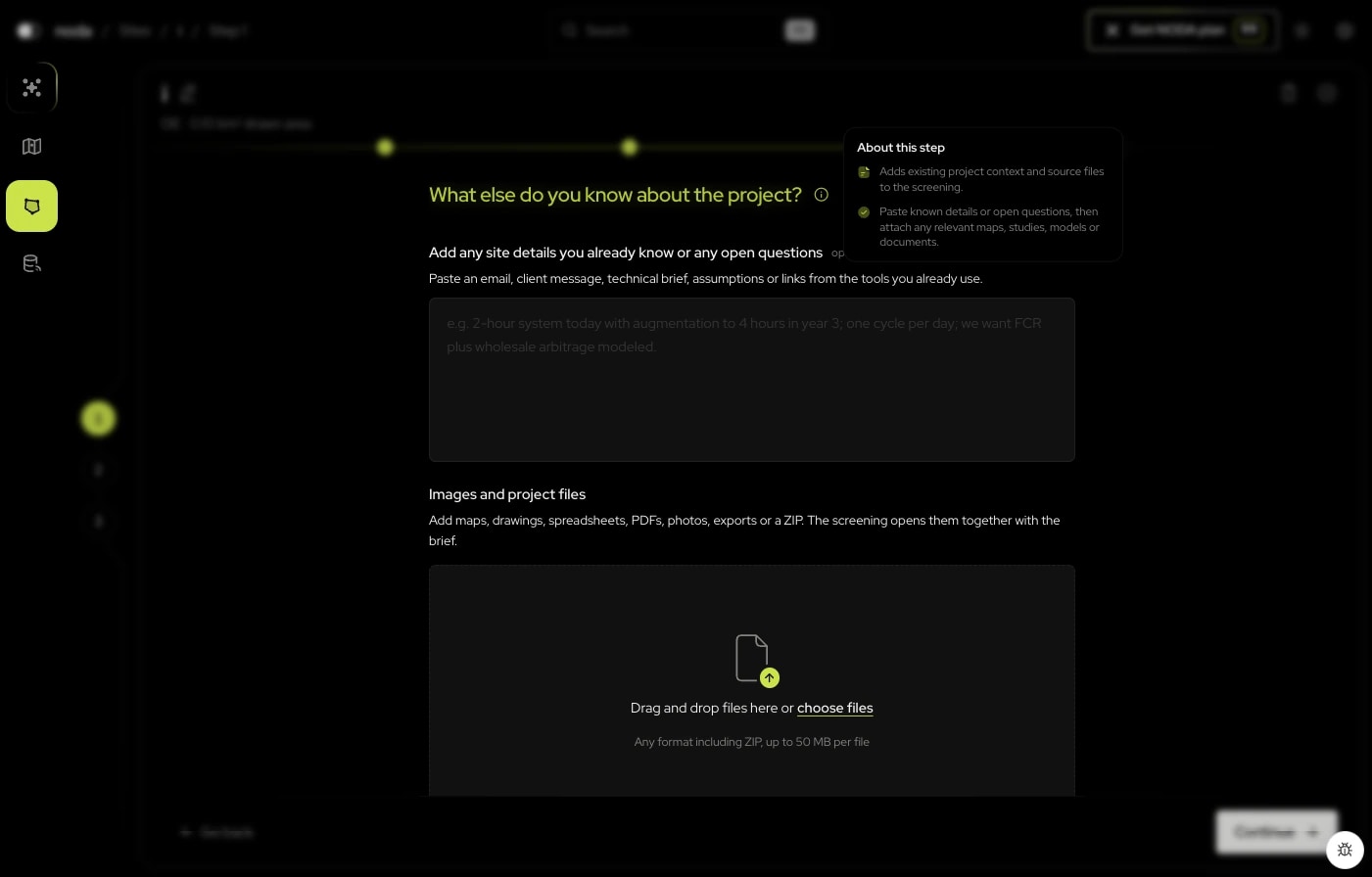
Let a specialist team work while you take another call.
One agent per aspect, one shared ledger. Your engineer arrives when the ledger is full, to check a view rather than build one.
Used 21 tools
- checking the relevant skill · done
- running a tool program · done
- reading the site details · done
- checking uploaded documents · done
- checking the time · done
- checking the site map layers · done
- checking past runs search · done
- checking route check · done
- checking save json · done
- updating the working plan · done
Project Area — the team
Send a report your client's engineer can check.
Every figure carries its class — source-backed, operator-confirmed, modelled or missing — and links to the document behind it. Checking it is reading, not redoing.
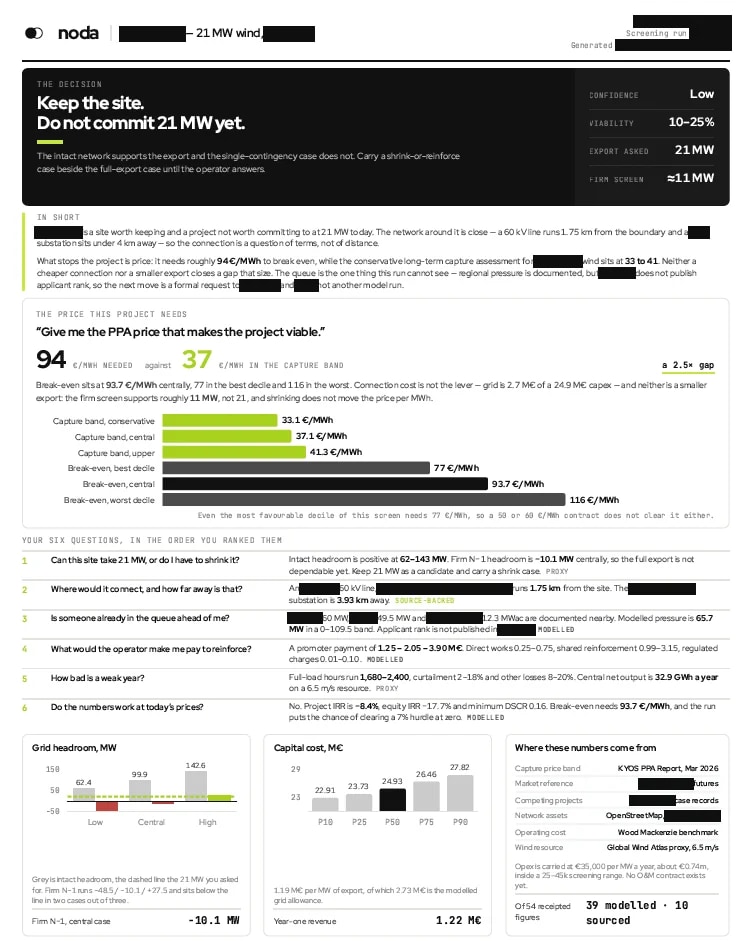
See it on a mandate you have already delivered.
Bring a site you took through full diligence. You know what the answer turned out to be, so the comparison is the only test that counts.
The three questions we hear on the first advisor call
Neither would we. The report is built to be reviewed: every figure carries its class and links to its source, so checking it is reading, not redoing.
Agreed, and that is why the first thing we suggest is a site you have already taken through full diligence. You know what the answer turned out to be. Compare.
You bill for judgement and you carry the liability. Neither moves. What moves is how many mandates the same team can take, and how much of an engineer's week goes to reading documents instead of engineering.