Run a feasibility study before you spend
Draw the boundary or attach the documents. Noda checks the grid, the land, protected areas and permits, lists each risk with its source, then gives you go, hold or stop.

Draw a boundary, get a verdict
Noda checks what already stands on the land, the grid, protected areas and the setback rules, then answers go, hold or stop. The example: a 90 MW wind boundary in Vaslui, Romania.
Preliminary risk report and one-page decision brief for the Albești site
 REPORT.pdfreports · Saved versionWorkspace
Report and one-page brief are in front of you. Here's the verdict.
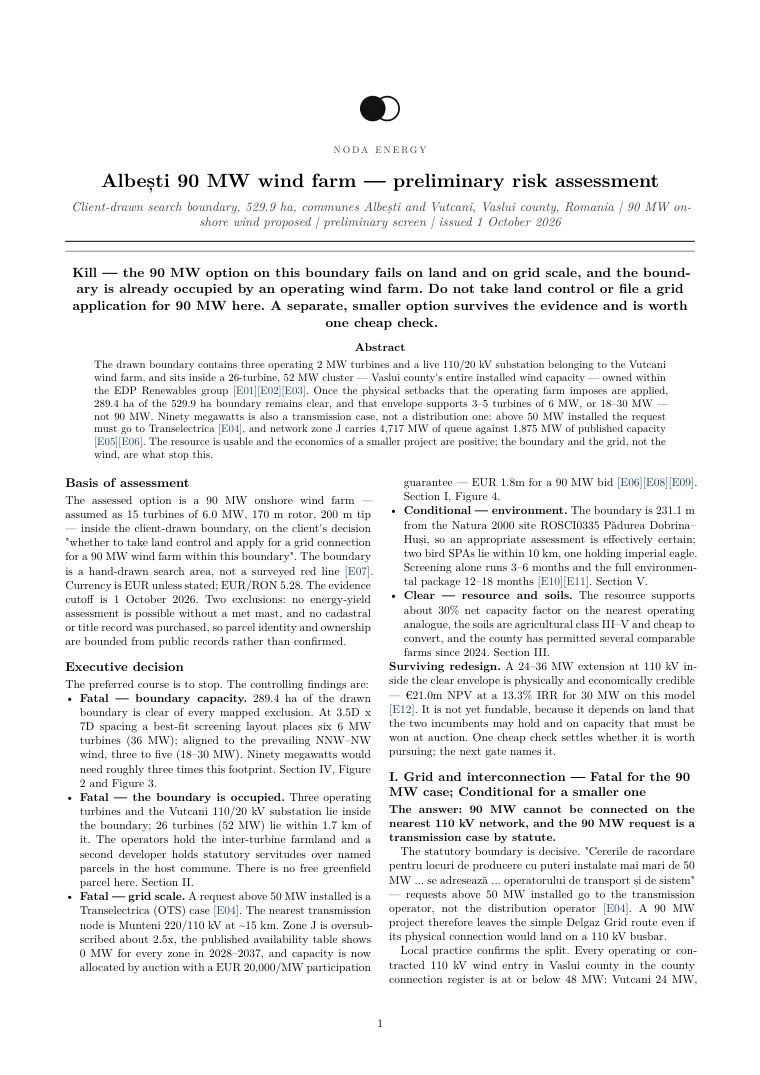
Kill the 90 MW option on this boundary
Don't take land control and don't file a grid application for 90 MW here. Three things each independently decide it, and they don't need each other.
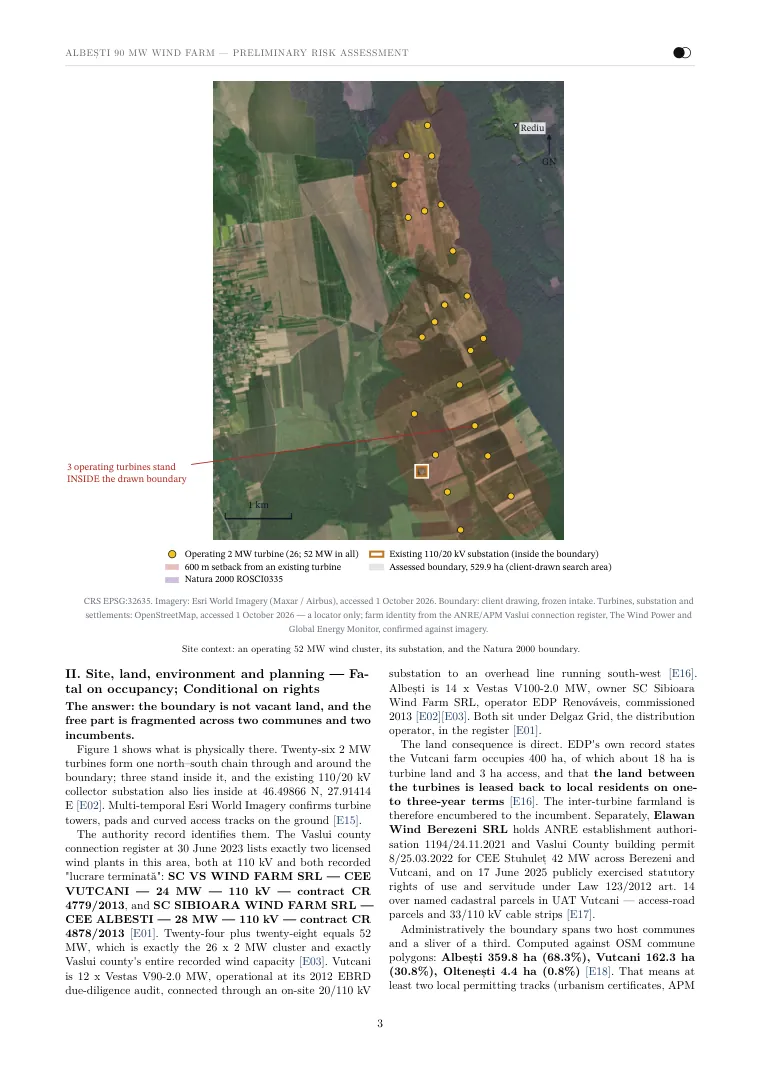
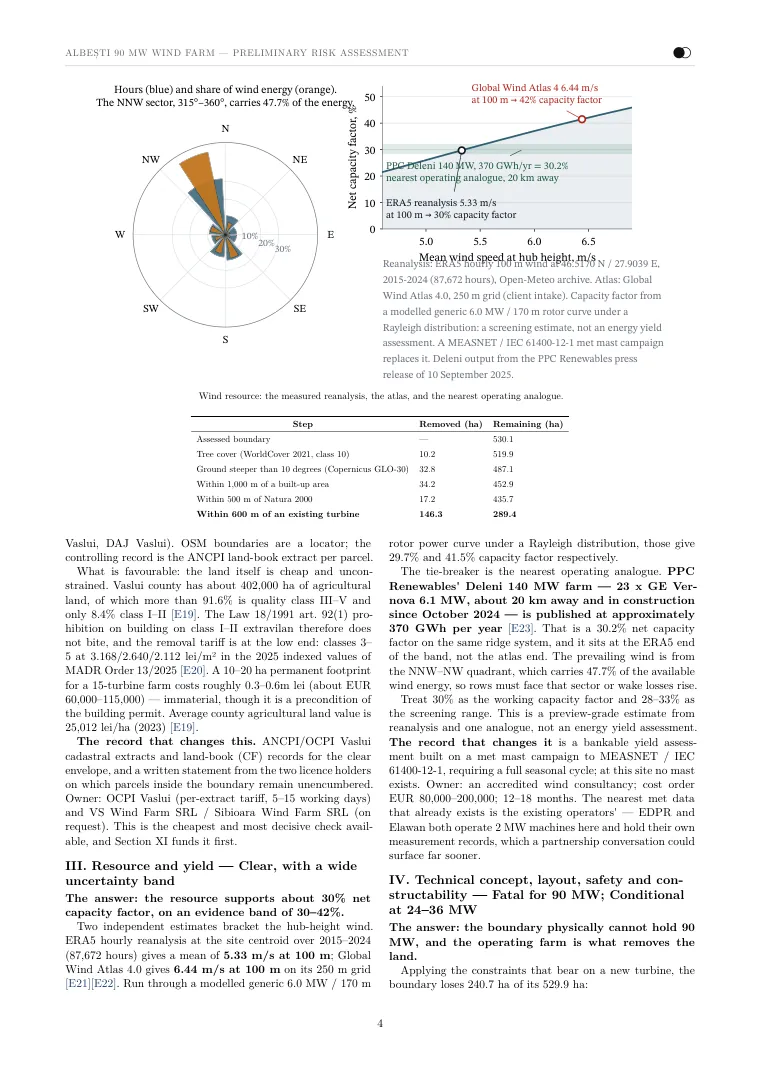
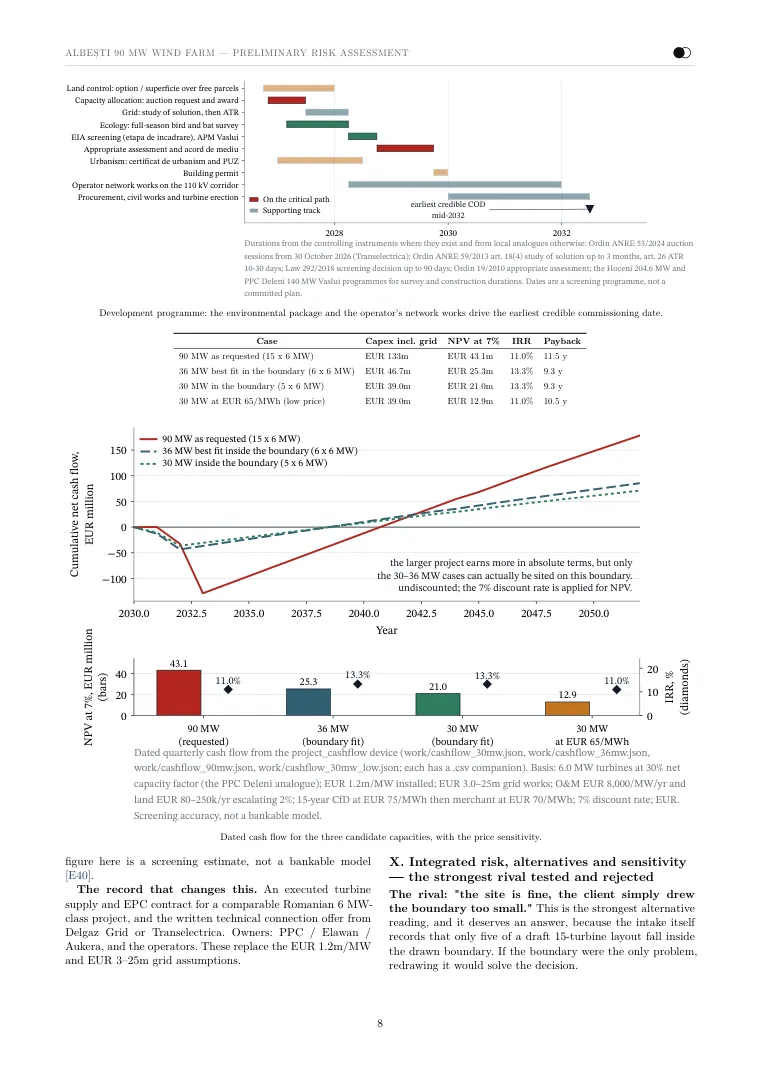
The boundary isn't vacant land. It contains three operating 2 MW turbines and a live 110/20 kV collector substation — I've put the substation on your map next to the 26 turbines. The ANRE register lists exactly two licensed plants here: Vutcani 24 MW and Albești 28 MW, both 110 kV under Delgaz Grid, both operating. That's 52 MW, which is the entire installed wind capacity of Vaslui county. Vutcani's operator holds the inter-turbine farmland, and Elawan holds statutory servitudes over named parcels in UAT Vutcani. You'd be buying into someone's operating asset.
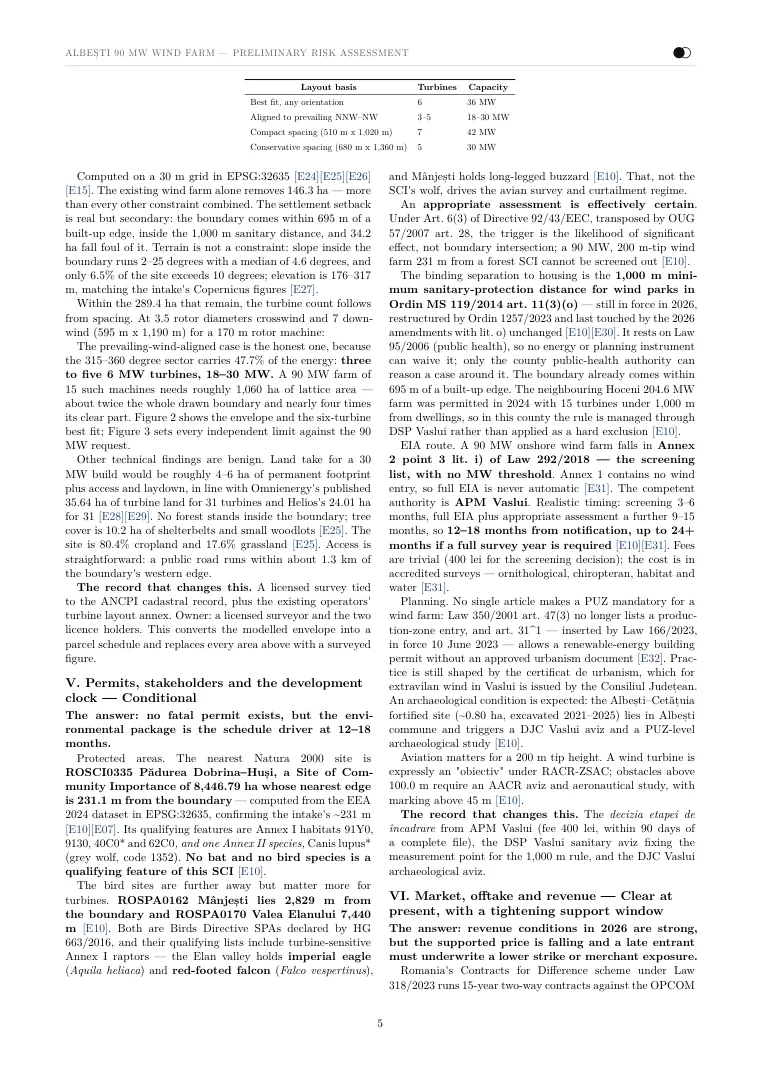
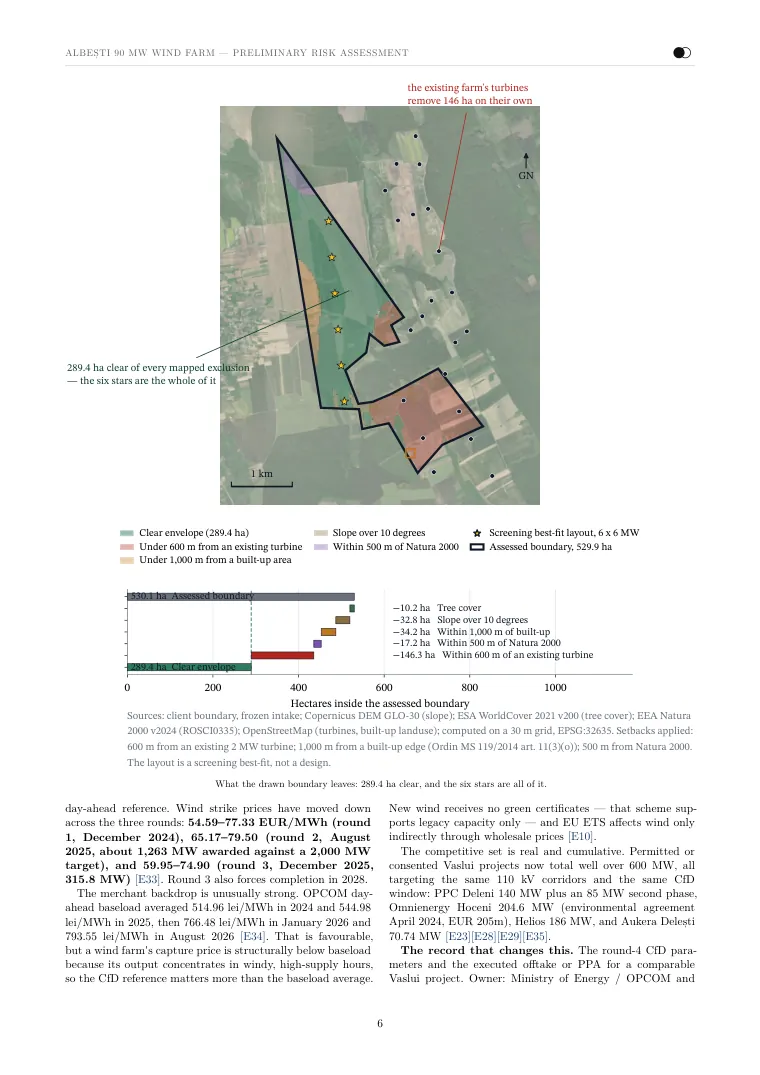
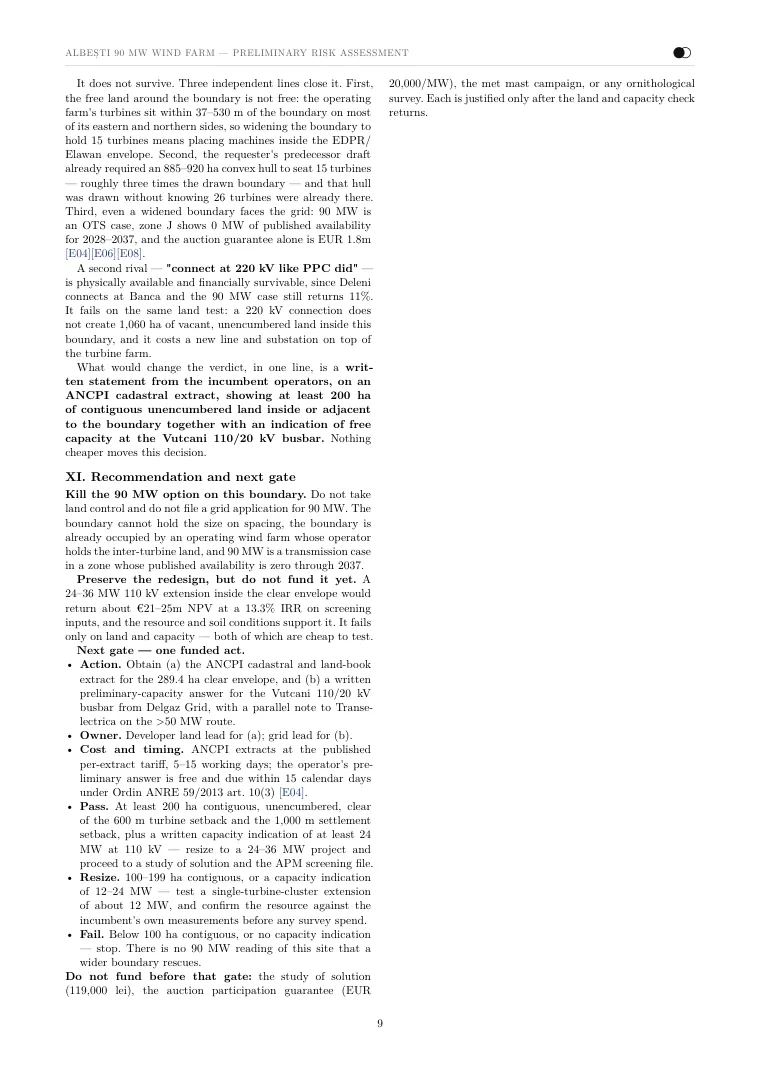
90 MW doesn't fit. Constraints remove 240.7 ha of the 529.9 ha boundary, leaving 289.4 ha — and the existing farm alone takes 146.3 ha. At standard spacing that holds 3–5 turbines, so 18–30 MW. Fifteen turbines need about 1,060 ha.
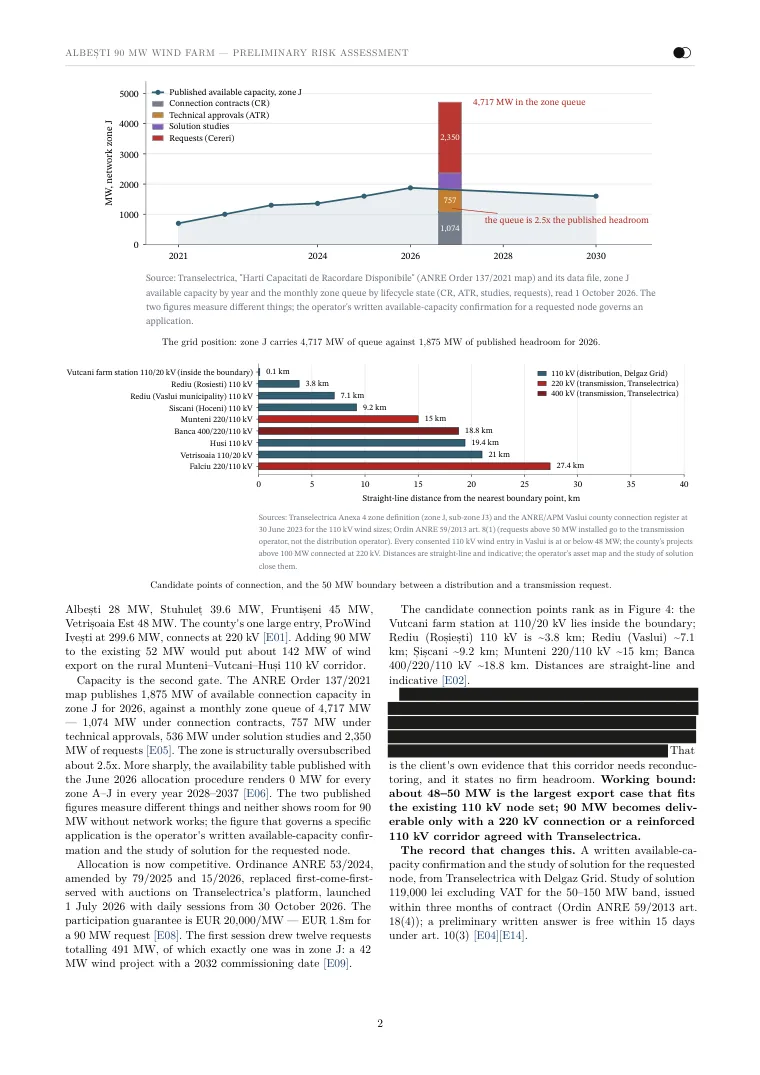
90 MW is a transmission case, not a distribution one. Above 50 MW the application goes to Transelectrica, not Delgaz Grid.
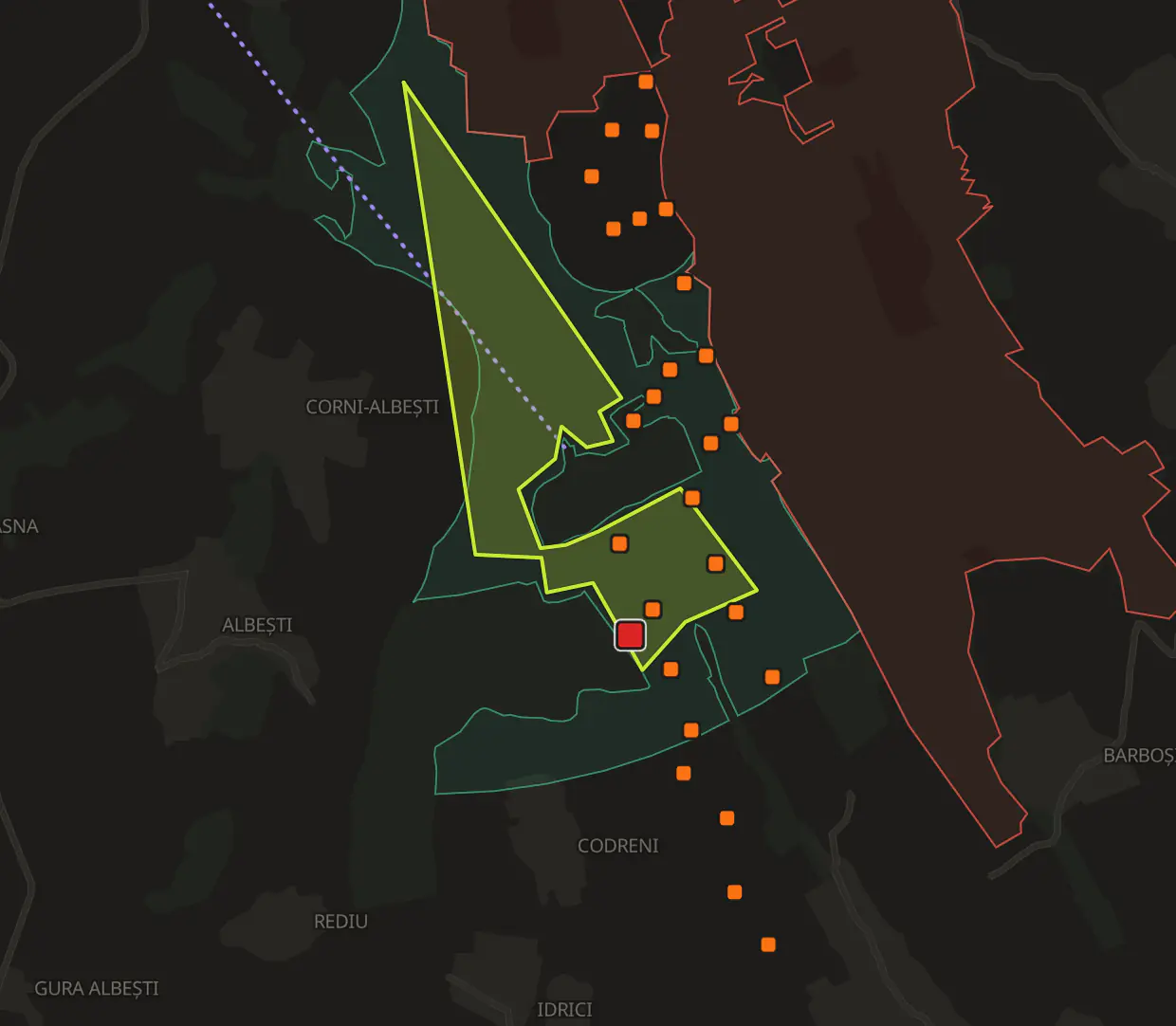
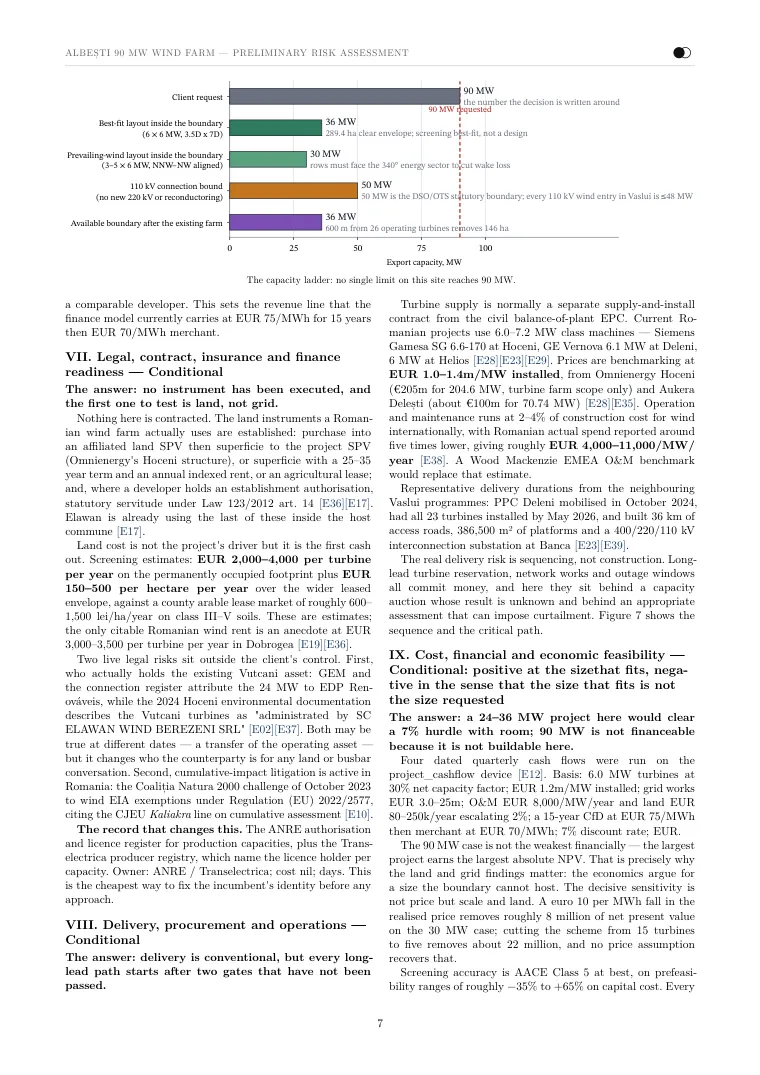
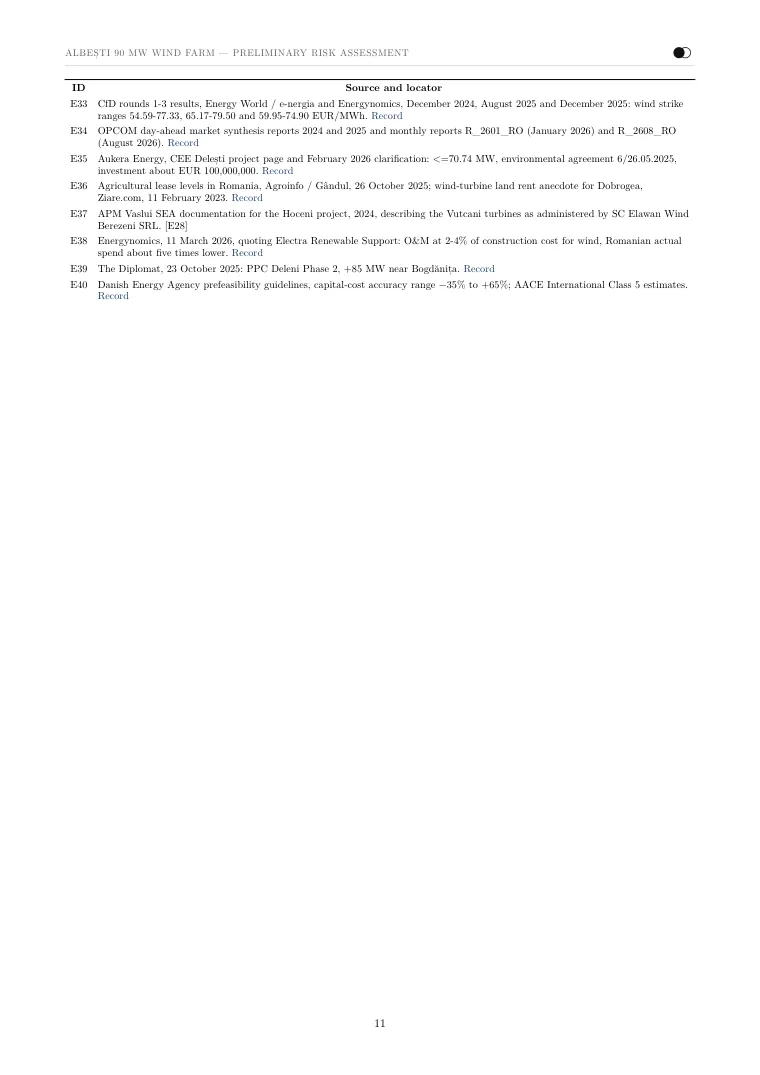
The report names its gaps. In the example, the run had no land-book extract, and the grid operators publish no capacity figure for each substation. The site has no met mast, so both wind figures come from models.
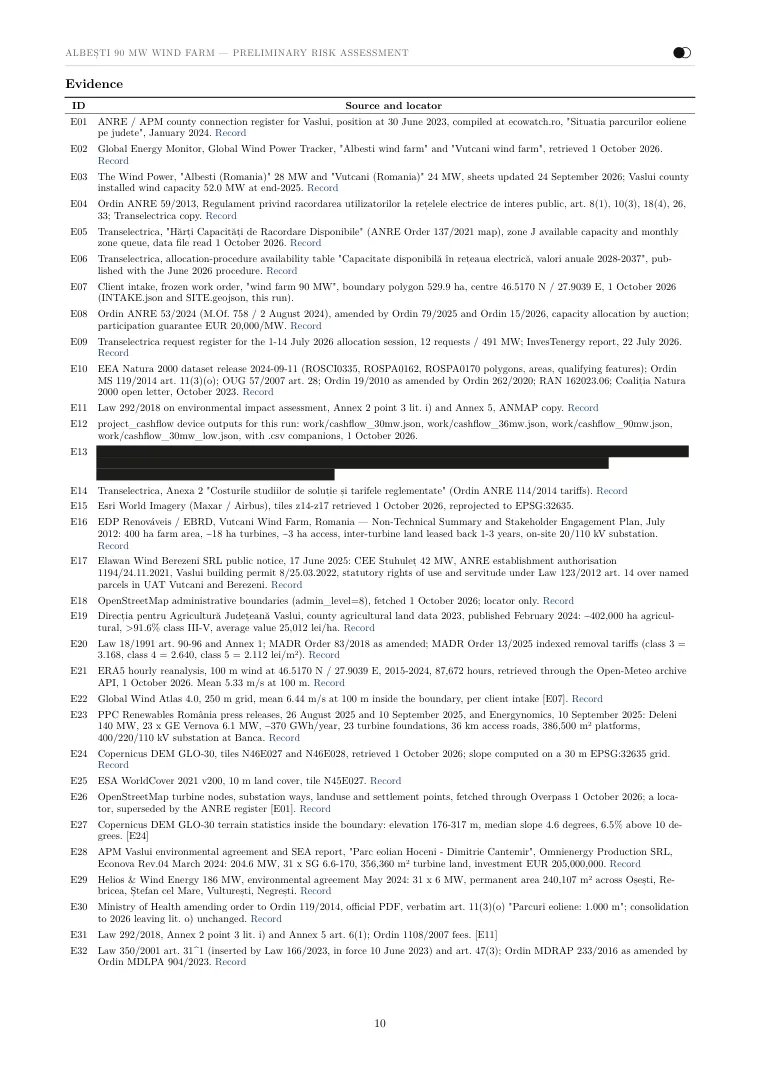
A verdict is a draft your team checks. The grid operator confirms capacity and the land registry confirms the land. In the example, the land-book extract takes 5 to 15 working days, and Delgaz Grid gives a written capacity answer, free, within 15 days.
How Noda checks what the grid can take
For each risk, Noda goes to the source that settles it and records each step, failed tries included. The example: the grid capacity published for the site’s zone.
17 steps, 14 minutes
- Look for the grid capacity map.Two searches, in Romanian
- Dead end: The map page’s text.No zone figures. Tried another way.
- Find the grid zone for the site.Vaslui is in zone J, with six other counties
- Download the map’s page code.It loads one script for the map
- Dead end: A quick search of the script.No match. Read the code itself.
- Read the map script.It fills in the figures for the year you pick
- Trace where the figures come from.One function loads them all from a file
- Dead end: Seven guessed file addresses.None found. Used the code’s path.
- Download the data file behind the map.15 KB: capacity and queue for each zone
- Check zone J against its queue.1,875 MW available in 2026, 4,717 MW queued
- Put it in the report, with source and date.
Result. 1,875 MW of connection capacity published for zone J in 2026, against 4,717 MW in the zone’s queue. Transelectrica’s capacity map data, read 1 Oct 2026. The verdict is stop for 90 MW on this boundary. A 24 to 36 MW extension to the existing wind farm could still work.
Read the report, see the work
Each finding keeps its source and date. Pick a highlight on the page or in the list to see how Noda got that line.
Use cases for risk screening
Each one opens Noda with a first message you can change before you send it.
- Turn notes into risks and checksTurn site notes into a list of risks and next checks
- Review project evidenceRead an offer, permit or contract: costs, deadlines, gaps
- Compare grid connection optionsNearby lines and substations, ranked with the evidence
- Map the permit pathEach approval, who gives it and in what order
Questions about risk screening
Something else? Write to hello@noda.energy.
A full feasibility study is the paid, detailed work: grid studies, surveys, yield and cost. A Noda screening is the desk study that comes before it and answers one question: is this site worth that money? Noda checks the grid connection options, protected areas and other constraints, land use, terrain and the permits you will need, then gives a go, hold or stop with the evidence behind it.
Noda finds the lines and substations nearby and ranks them by voltage, distance and route. It reads what the operators publish about capacity and the queue. Where a substation's free capacity is unpublished, Noda estimates it and shows its working. The grid operator confirms capacity.
A fast first pass over the documents behind a project, before an LOI or a full technical due diligence. It looks for what could stop the project or lower its value: a grid offer that differs from the permit, parcels missing from the lease, approvals about to expire, missing annexes. Noda drafts this list, with the page or clause behind each risk and the check that would close it.
The documents a project comes with: the grid connection approval or offer, the urban planning certificate, surface-rights and lease contracts, siting permits, and environmental decisions and studies. PDFs and scans both work. Noda checks versions, parties and annexes first, then traces costs, deadlines, conditions and obligations back to the text.
For your location, technology and size, Noda lists each approval the project still needs, the authority that issues it and the order they depend on, with a source for each. It keeps legal deadlines apart from typical processing times, and it marks where the local authority must confirm a requirement.
A Noda screening is a draft for your team to check. It tells you which sites deserve the cost of a study or a grid application. Lenders still need their independent engineer, and the grid operator confirms capacity.
Which site should Noda check?
Ask in your own words. You can attach a PDF, KML, GeoJSON, CSV or Excel file.
Have an account? Log in